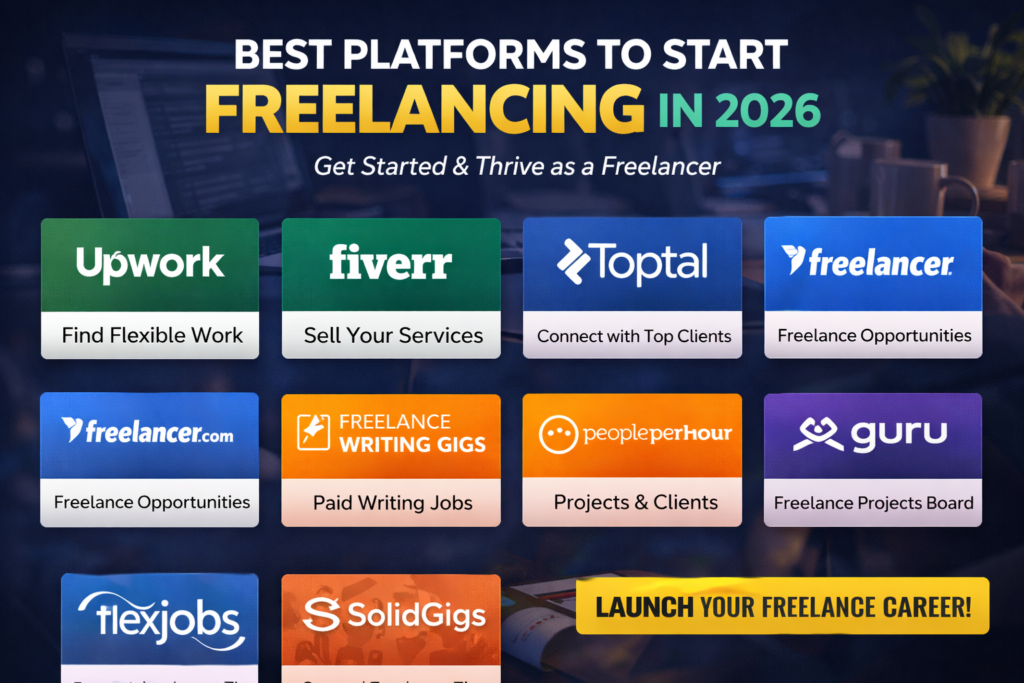
Freelancing has become one of the most popular ways to earn income in 2026. Whether you’re a writer, designer, developer, marketer, or virtual assistant, the demand for freelance talent is higher than ever. The key to success is finding the right platform that connects you with clients, provides secure payment, and offers growth opportunities. This guide highlights the best platforms to start freelancing in 2026 and tips to get started.
1. Upwork
Upwork is one of the largest freelancing platforms in the world. It connects freelancers with clients across a wide range of industries.
- Pros:
- Large client base with diverse projects
- Secure payment system
- Opportunities for long-term contracts
- Cons:
- Highly competitive
- Service fees (5–20% depending on earnings with a client)
Tips to Succeed on Upwork:
- Create a professional profile highlighting skills and experience.
- Submit tailored proposals for each job.
- Focus on building long-term relationships with clients.
2. Fiverr
Fiverr is known for its “gig-based” freelancing model, where freelancers offer specific services starting at $5.
- Pros:
- Easy to set up gigs and start earning quickly
- Great for beginners
- Flexible pricing options
- Cons:
- High competition in popular categories
- Platform fees of 20% per transaction
Tips for Fiverr Success:
- Offer unique or specialized services.
- Use high-quality images and videos for your gigs.
- Encourage clients to leave positive reviews to attract more buyers.
3. Freelancer.com
Freelancer.com is a global platform offering thousands of freelance projects.
- Pros:
- Wide range of projects across industries
- Opportunity to bid on large-scale projects
- Offers contests to showcase skills
- Cons:
- High competition for top-paying projects
- Service fees on earnings
Tips to Stand Out:
- Write personalized bids highlighting your skills and solutions.
- Build a strong portfolio to attract high-paying clients.
- Participate in contests to gain visibility and credibility.
4. Toptal
Toptal is an elite platform that connects top freelancers with clients looking for high-quality work.
- Pros:
- Access to high-paying clients and long-term projects
- Focus on quality rather than quantity
- Networking opportunities with leading companies
- Cons:
- Rigorous vetting process
- Not ideal for beginners
Tips for Toptal:
- Prepare a professional portfolio and demonstrate expertise.
- Focus on niches like software development, finance, or design.
- Pass the screening process to gain access to premium projects.
5. LinkedIn
LinkedIn is not just a social network; it’s a powerful platform for freelancers to find clients directly.
- Pros:
- Build personal brand and professional network
- Direct access to clients without platform fees
- Opportunity to showcase portfolio and expertise
- Cons:
- Requires consistent networking and engagement
- No formal bidding system
Tips for Freelancers on LinkedIn:
- Optimize your profile with a professional photo, headline, and summary.
- Post regularly about your skills, projects, and achievements.
- Connect with potential clients and join industry-specific groups.
6. PeoplePerHour
PeoplePerHour connects freelancers with small and medium businesses worldwide.
- Pros:
- Flexible project types (hourly or fixed price)
- Offers proposals, contests, and “Hourlies” (predefined services)
- Cons:
- Platform fees of up to 20%
- Limited client base compared to Upwork or Fiverr
Tips for Success:
- Create detailed Hourlies that clearly define your services.
- Respond quickly to client inquiries.
- Focus on building reviews and ratings for credibility.
7. 99designs
99designs is a niche platform for freelance designers.
- Pros:
- Focused on design projects (logos, websites, branding)
- Contest system allows showcasing your work
- High-paying clients in design-focused industries
- Cons:
- Highly competitive for contests
- Commission fees on earnings
Tips for Designers:
- Participate in design contests to build a portfolio.
- Specialize in a niche design style to stand out.
- Maintain strong client communication for repeat business.
Tips for Freelancing Success in 2026
- Build a Strong Portfolio – Showcase past work to attract clients.
- Develop Multiple Income Streams – Don’t rely on a single platform.
- Communicate Effectively – Clear and professional communication builds trust.
- Set Competitive Rates – Research market rates for your skills.
- Stay Updated – Learn new skills and trends in your industry.
Conclusion
Freelancing in 2026 offers limitless opportunities for individuals with skills in writing, design, programming, marketing, and more. Platforms like Upwork, Fiverr, Freelancer.com, Toptal, LinkedIn, PeoplePerHour, and 99designs provide access to clients worldwide. By choosing the right platform, creating a strong profile, showcasing your expertise, and consistently delivering quality work, you can build a sustainable freelancing career and earn a substantial income from home.